Helping Children Navigate Divorce: A Gentle Back-and-Forth Journal Approach for Ages 6–18
Helping Children Navigate Divorce: A Gentle Back-and-Forth Journal Approach for Ages 6–18
By The Honest Pages Co.
Divorce and major family changes don’t just shift schedules and living arrangements — they shift a child’s sense of safety, identity, and emotional world.
And here’s the truth most adults quietly notice:
Children don’t always say what they’re feeling out loud.
Some withdraw.
Some act out.
Some say “I’m fine” while carrying confusion, worry, or guilt inside.
That’s why supportive communication tools matter more than perfect conversations.
Why Talking About Divorce Feels So Hard (For Both Parents and Kids)
Even loving, emotionally aware parents can struggle with what to say during a family transition.
Not because they don’t care — but because the emotions are complex.
Children often wonder:
“Was this my fault?”
“Will things ever feel normal again?”
“Can I still love both parents?”
“Is it safe to share how I really feel?”
At the same time, parents are navigating their own grief, stress, and life changes.
This is where structured communication tools can make a meaningful difference.
A Different Approach: Back-and-Forth Journaling
Back-and-forth journals create a shared, low-pressure space where:
A child can express feelings privately first
A parent can respond with care instead of reacting in the moment
Conversations can unfold gently over time
Emotional repair can happen in small, consistent ways
There’s no pressure for perfect wording.
No forced face-to-face conversations.
Just honest connection, one page at a time.
And importantly — writing is optional.
Many families use the prompts as talking points instead of written responses, especially when a child isn’t ready to write. This still opens the door for meaningful, age-appropriate dialogue.
Age-Matched Journals for Different Developmental Needs
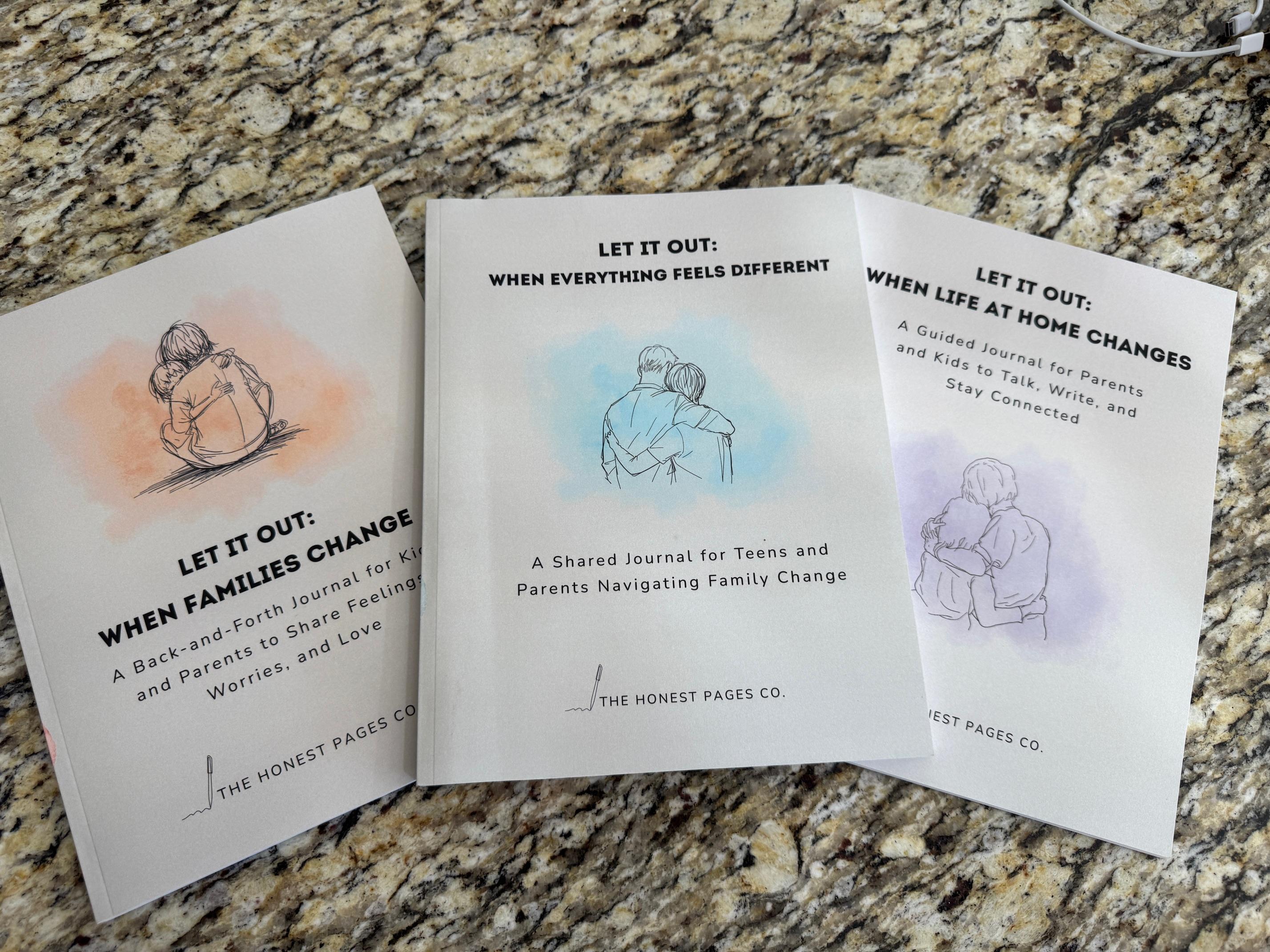
Children process family change very differently depending on their age. That’s why the Let It Out series is intentionally designed for specific developmental stages.
Ages 6–9
Let It Out: When Families Change: A Back-and-Forth Journal for Kids and Parents to Share Feelings, Worries, and Love
https://a.co/d/2qSASx2
Younger children often don’t have the language to explain big emotions.
This journal uses simple prompts, emotional check-ins, and gentle structure to help kids:
Share worries safely
Feel reassured through parent responses
Express love, questions, and feelings in a supported way
Even reading prompts aloud together can spark comforting conversations.
Ages 10–13
Let It Out: When Life at Home Changes: A Guided Journal for Parents and Kids to Talk, Write, and Stay Connected
https://a.co/d/03DXY0rp
Preteens are highly aware of change but may internalize emotions or try to “stay strong.”
This journal supports them by:
Encouraging honest expression without pressure
Creating a predictable space for connection
Helping parents model emotional openness
It works especially well for families who want to rebuild trust and communication during transitions.
Ages 14–18
Let It Out: When Everything Feels Different: A Shared Journal for Teens and Parents Navigating Family Change
https://a.co/d/00so7DbV
Teens often want independence while still needing emotional safety.
Direct conversations can feel awkward or emotionally charged.
This journal offers:
A respectful communication bridge
Space for deeper thoughts and reflections
A way to stay connected without forcing difficult talks
For many teens, writing (or reviewing prompts) feels safer than immediate verbal processing.
When Writing Isn’t the Right Fit
Not every child wants to journal — and that’s completely okay.
These journals can also be used as:
Conversation starters during car rides
Weekly emotional check-ins
Family reflection tools
Therapy or coaching discussion prompts
Bedtime connection moments
Sometimes simply asking,
“Which question on this page feels easiest to answer today?”
is enough to open the door.
Supporting Connection During Family Change
Divorce changes the structure of a family — but it does not have to break emotional connection.
What children need most during transition is:
Reassurance
Consistency
Permission to feel
Safe ways to express themselves
Ongoing reminders that they are loved
Back-and-forth journaling provides a steady, compassionate rhythm of communication when emotions feel overwhelming or words feel hard to say out loud.
Because when life at home changes, connection shouldn’t disappear —
it should become more intentional.